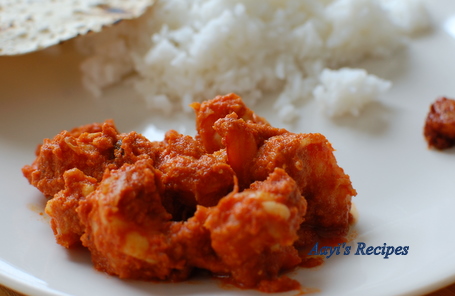
The specialty of Konkani seafood dishes is – they are almost always quite spicy and made with coconut. A drizzle of coconut oil on top of these, with hot rice tastes heavenly. I can’t stress enough on how much I miss these dishes here. Being from coastal area, we always got very fresh fish and relished these spicy dishes made at home. Don’t know why I don’t make these often here.
Last week I was talking to my friend Hema over the phone. Like every time that we talk, she mentioned that she had a spicy sungta sukke that day. Ohh, just the name of it, made the Konkani girl in me crave for it. I kept thinking about it for next two days. Then finally gave up and asked her to give me her recipe. This is what she gave me, I tried on Sunday. We had awesome lunch.
Well, Hema’s recipe is slightly different than what aayi uses for dhoddak. We usually don’t use coriander and teppal/tirphal in same dish. Here is my aayi’s version. Also, I have rarely seen the usage of non-fried coriander seeds in aayi’s cooking. But for once, I wanted to try the recipe as it is, without modifying. It came out really well.
Ingredients: 1 lb (0.45kgs) prawns 2 tbl spn fresh/frozen coconut 9-10 red chillies (if you can handle more, increase it) 1/2 tea spn coriander seeds 3-4 teppal/tirphal 2-3 kokum pieces Salt
Method: Grind the coconut with red chillies, coriander seeds to a very smooth paste. Do not add too much water (This needs a good Indian mixer). When it has become very smooth, add teppal and run the mixer for just couple of seconds. (Note: teppal should never be ground. It will entirely spoil the dish. This step is just to bring out the aroma, but not for grinding it). In a thick bottomed pan, mix the paste with prawns, kokum, salt. Cook it on a low heat till prawns are done. Serve as a side dish with rice. A little coconut oil drizzled on it tastes great.
Serves : 3-4 Preparation time : 20 mins

Pictorial:


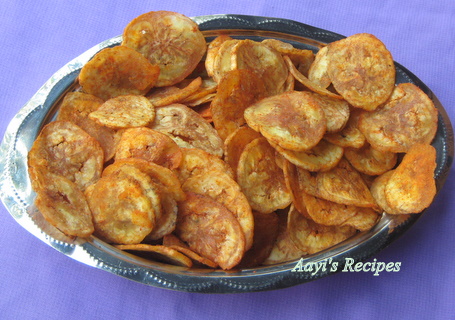
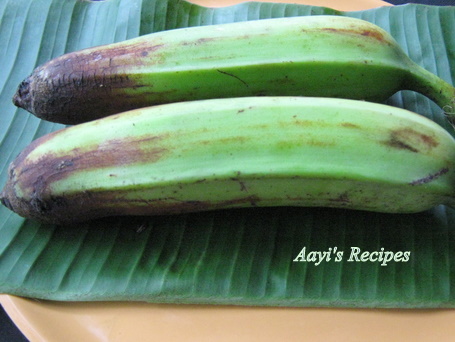
Banana chips are a very popular snack. We grow many varieties of bananas in our garden. Some of these are consumed ripe and some are mainly used for cooking (also called plantains). As my children liked them, I used to prepare them on large scale and store them in big tin containers. They loved to eat hot chips just out of oil. While my son and husband loved the spicy ones, my daughter liked plain chips.
I usually fried them in coconut oil as we were not diet conscious in those days. Chips fried in coconut oil last for more days. Any types of raw bananas (fully grown only) can be used for this purpose. I normally use a local variety called ‘Anabale’ in Konkani. Another popular variety used is called ‘Nendrabale’.
Ingredients: Raw bananas Oil SSlt Turmeric powder Red chilly powder/pepper powder (optional)
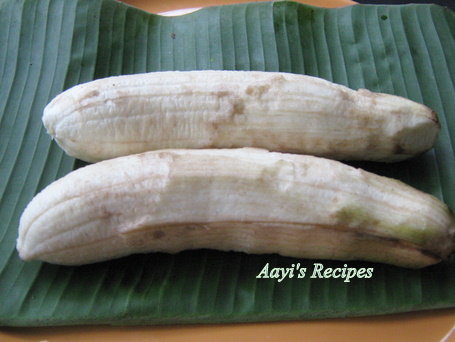
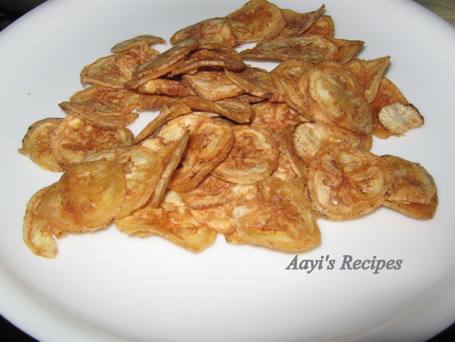
Method: Put longitudinal cuts on the external surface of bananas with knife and peel off the skin. Apply little oil to palms (to avoid palms becoming sticky and black). Immerse the peeled bananas in water for about thirty minutes. This removes the gum from bananas. Cut the bananas into thin circular chips and spread them on a cotton cloth and allow them to dry for about thirty minutes. Mix 1-2 tea spn salt and 1/4 tea spn turmeric powder in 1/4 cup of water and keep it aside. Heat oil and deep fry the dried banana chips in it. When they are almost done (Take the spoon and mix the chips, if you can hear the sound of chips, then they are almost done) pour 1-2 tea spn salt and turmeric water in it. Take care to avoid splashing of hot oil when you add salt water to the oil. Frying is almost over when the splashing and the sound ceases. Take off the chips from the oil. You can sprinkle the red chilly powder or pepper powder over the fried chips per your taste.
You can store these chips in a container when they cool. Remember to reduce the amount of salt water for subsequent batches as the oil in the pan absorb some amount of salt.
Note: Instead of adding normal salt, you can also sprinkle some rock salt on top to introduce unique taste.
Pictorial: