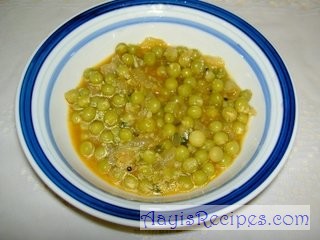
Few days back I had posted a recipe for poha masala . I had mentioned in the post that this masala is very popular at our native and used in many of the dishes. Many people call it as “Kumta masala” as this is readily available in Kumta .
This is my aayi’s own recipe. She had played around with green peas and this was one amazing result. I love this very much, I tried replacing poha masala with other masalas but somehow I liked this version very much. Even my husband, who is not a great fan of peas, liked it very much. I know few of you tried poha masala, if the masala is still remaining, give it a try and I can bet, you will become a big fan of this dish.
Ingredients: Green peas(do not use fresh ones) 1 cup Onion(chopped) 1/2 cup Coconut 1 tbl spn Mustard seeds 1/2 tea spn Asafoetida a pinch Turmeric a pinch Green chilies 2-3 Sugar 1/2 tea spn Poha masala 1/2 tea spn Oil Curry leaves 4-5 Salt
Method: Soak the green peas in water overnight. Pressure cook them with enough water (3-4 whistles in the cooker, use the lowest vessel for peas when cooking with other things). Heat oil and add mustard seeds. When they start popping, add green chilies, curry leaves, asafoetida. Fry for sometime, add onion, turmeric and fry till onions turn translucent (do not make them brown). Now add cooked peas, coconut and cook for around 7-8mins. Add sugar, salt and poha masala. Cook for 2-3mins. Serve as a side dish with rice and any daal/sambar.
Serves : 2-3 Preparation time : 30mins

“Dhoddak” usually has a very different way of cooking. The vegetable/fish is mixed with coconut masala. Then kept in between banana/turmeric leaves and charcoals are put on top of the vessel to make an arrangement like baking. (There might be other ways of making dhoddak, but I know only this one). Aayi makes two types of them, one is with vegetables and other with fish(mackerel) . For vegetable dhoddak we use assorted vegetables like ‘pala pansa kadgi/jeevi kadgi’(bread fruit) , gosaLe(ridge gourd) , bhende(okra), raw banana(plantain), bitter gourd etc. This dish gets an amazing aroma due to the leaves and charcoal.
Any dry dish with teppal(sichuan pepper) in it is also called huggi (thanks Ashwini ). I have heard both the names many times. May be different names are used in different dialects of Konkani. I adore this dish.
Ingredients: 2 cups assorted Vegetables(bread fruits, plantains, okra, ridge gourd, bitter gourd cut into big pieces) 1 cup fresh/frozen coconut 4-5 red chillies 2 kokum pieces 4-5Â Teppal(Sichuan pepper) Banana/turmeric leaves Salt
If kokum is not available, use tamarind. Since teppal is not available here in US(it is available in only few Chinese/Japanese stores), this dish can be prepared without it. But the leaves are necessary, if none of the leaves are available, do not attempt to make this dish.
Method: If using bitter gourd, apply salt to it and keep for 30mins. Squeeze off the water. Grind coconut and red chillies to a very smooth paste (with very little water). In a heavy bottomed pan or non stick pan, spread banana/turmeric leaves.

Add the masala, slightly crushed teppal, kokum pieces, salt and vegetables.


Mix gently with spoon.

Spread banana/turmeric leaves on top.

Tthe vessel is covered with a plate and some live charcoals are spread on it.


(If you don’t find charcoal, just close the lid and cook.)
Serve with rice.
PS: Some people get severe gastric problems by eating breadfruit. My dad and my husband got severe chest pain once due to this vegetable (they are eating it for ages, only once they got this problem). So, if you are not very familiar with this, be careful. This usually happens when you taste it after a very long time or for the first time. You can even make this dish without this vegetable.
If all the vegetables are not available, one or two of them can be ignored, but it tastes great when all of them are used. We frequently make this without breadfruit as it is not available all the time.
Vegetable sidedish(dhoddak/huggi)
