
I was planning to make naan for a long time now. It remained just a plan for a long time for some reason or other. Finally V gave enough push to actually try my hands on it. He usually does not like this very popular bread. But one of his colleagues is a great fan of garlic naan and V wants to invite him home sometime. I didn’t want to experiment on him, so I had to learn making these at home.
My first attempt was not very good. Though everything was fine, I rolled them a bit thicker than required for naan. When baked, they became like a thin crusted pizza base. I had also used 1 cup all purpose flour + 1/2 cup wheat flour for this. I think the wheat flour made it a bit dense. So this time, I made them real thin and I could not believe my eyes when they puffed up beautifully. Within minutes, we finished them all.

The pictures don’t do justice, as we really like eating them very hot, fresh out of oven, I did not spend time clicking pictures as they get cooled off. But I tried to click some anyway. When I make them next time, I will try to take more pictures.
Ingredients: 1 tea spn active dry yeast 2 tbl spn yogurt 1 and 1/2 cups all purpose flour 1/2 tea spn sugar 3/4 tea spn salt 1/2 cup milk 2 tbl spn water
Garlic-butter topping(Mix both): 1 tbl spn butter 1 tea spn garlic
Method: Heat the water to luke warm (it should be warm when you dip your finger in it. I normally microwave water for 10sec). Add yeast, sugar and salt. Leave it for 10mins till the yeast forms a froth(gets activated). Now add all remaining ingredients and make it into a dough. Knead for 3-4mins. Cover with a cloth or plastic wrap and leave it in a warm place for about 2-3hrs till the dough doubles in volume. Preheat the oven to 425F. Make balls from the dough and roll them. Do not make them too thick as they puff up when baked (I roll them into thicker than chapathi/phulka but thinner than alu paratha ). Apply a little butter on top. Line them on a lightly buttered cookie sheet. Bake in the oven at 425F for about 7mins till they puff up. Take out, apply the garlic-butter mixture on the top and keep it in the oven again. Bake for another 5mins till the top looks brownish.
Makes about 8 small naans
PS: – I kept a pizza stone in the oven and then placed the cookie sheet with naans on top of it. – You can reduce the amount of butter if you don’t like too much butter. – Avoid the garlic for plain naan. – Do not apply too much butter while baking to avoid the brown color. I like the color, so I bake it with butter. – If you do not have oven at home, roast the naans on a tava like normal chapathis.

Konkanis use Kulith (horsegram) very frequently in cooking especially in cold season. It is supposed be to be garam – i.e. warming effects on body. We normally don’t use it in summer because of warming effects. This saru – a thin gravy of soup like consistency, is very common during these days. A generous quantity of ghee is also added to the saru as ghee is also supposed to have garam effect. The water from cooking horsegram is used to make this saru and the cooked horsegram is used to make stir fry or kosambaris (salad).
I usually make two types of sarus . One with the coconut and this is the second version.
My grandmother used to tell us about a unique way of making this saru . Horse gram was used to feed the cattle. So they used to cook horse gram in large quantities. Instead of discarding such a huge amount of this very nutritious water, they would boil the water till it reduced to a small quantity and save it for using it in the days when this gram was not available. This thickened horse gram water was called “ Kulitha kattu “. When needed, this was diluted in water and the saru was prepared. I have never tried this here as I cook the horse gram whenever required.
Horsegram is good for arthritis (Ganti duuk) pain. One of my relatives who had arthritis was taking some homeopathic medication and the doctor had suggested eating horse gram.
Horsegram changes color as it becomes old. When it is very fresh, it has a lighter color, and as time passes, it becomes very dark.
Cooking horsegram : Wash 1 cup horse gram in water. Add about 3 cups of water and cook in pressure cooker. (Soaking the horse gram for few hours helps in cooking faster). It normally takes a very long time compared to any other pulses/grams. About 5-6 whistles. Separate water and cooked horse gram. Save both.
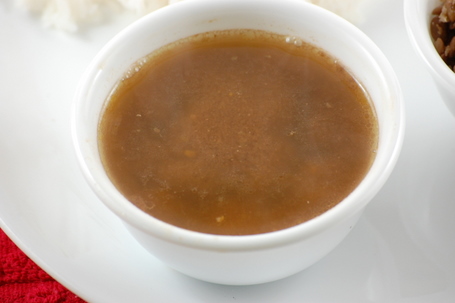
Ingredients (Saru) : 2 cups horse gram water 2 green chillies 1/4 cup chopped onion 1 tea spn ghee 1 tea spn chopped garlic 1 tbl spn cooked horse gram(optional) Salt
Method: Add onion, salt and green chillies to the horse gram water and bring it to boil. Grind 1 tbl spoon of cooked horse gram and add it to the boiling mixture. Cook till the water reduces a bit and gets a bit thicker. Take off heat. Heat ghee and add garlic. When the garlic turns brownish, add this seasoning to the saru .
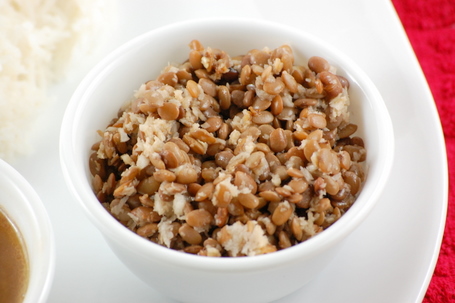
Ingredients (Kosambari): 1 cup cooked horse gram 2 tbl spn fresh/frozen coconut 3 green chillies A pinch asafoetida 1-2 tea spn coconut oil Salt
Method: Slightly crush the cooked horse gram (do not make a paste). Dilute asafoetida in 1 tea spn water. Add this to coconut. Add green chillies, salt and mix well with your fingers ( chirduche ). Now add the cooked horse gram and mix well. Add the coconut oil and mix.
Serves : 3-4 Preparation time : 40mins
