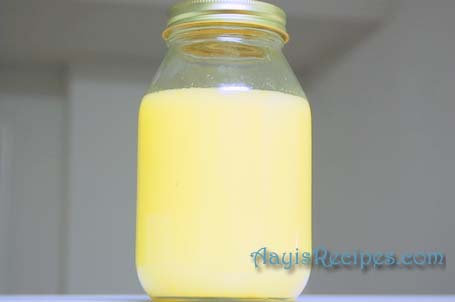
Ghee (Hindi), tuppa (Kannada), tup (Konkani)-clarified butter must be one of the most important ingredients in any Indian sweets. It gives a unique flavor and aroma to any sweet dish and takes the dish to a new level. When in India, my supply of ghee always came from my Aayi. I never liked the store bought ghee . I started making it in Bangalore when I used to buy Nandini whole cream milk . This milk gets a thick cream when heated. So I used to save it and make ghee out of it. When I came to US, I was totally lost since the milk we get here does not get the cream when heated. The ghee that we get in Indian stores is very expensive. So I started using shortening as a replacement as told by one of our friend. Shortening does give a better result than ghee for nankatayi , chiroti and many other dishes, but some of my readers said that it is not very good for health. So finally I decided to make ghee at home using unsalted butter.
I usually buy the 4 pack combo of unsalted butter in Costco and make ghee of 2 or 3 packs at a time and store. I somehow feel it is better than the store bought ghee and works out much cheaper. So this is what I have been doing for last many months. I was thinking of this post for a long time now, because of the increasing number of cooking newbies who read Aayi’s Recipes. I took as many pictures as possible, I am happy that my camera still is working after all these pictures. There was a thick vapor that sat on the camera lens when I tried to take picture from too close :(.
Apart from using in many sweet dishes, ghee is usually added to lamps (oil lamps) during festivals. It is supposed to be very auspicious. I still remember aayi giving ghee mixed in sugar after it was offered to god during one of the festivals.
– Heat 7-8 sticks of butter in a clean heavy bottomed pan. When all the butter is melted, keep the heat on low. Let it boil.

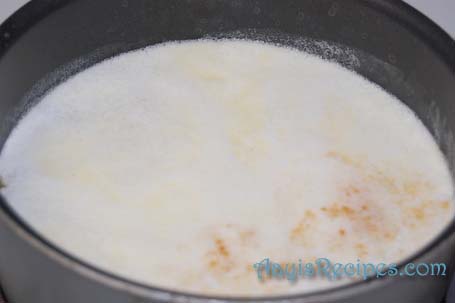
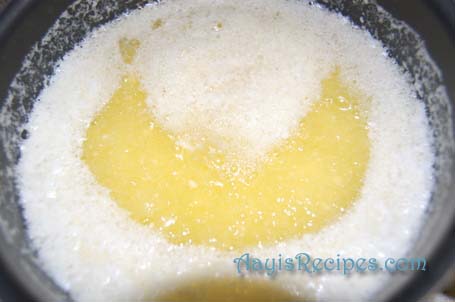
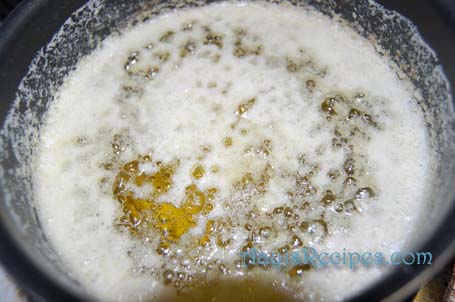
– Just blow lightly some air, if the liquid has become transparent and you can see the bottom of the pan clearly, the ghee is done. Switch off the heat. (Do not keep the heat on at this stage, otherwise the ghee gets burnt). Some people like to add a little fenugreek( methi )
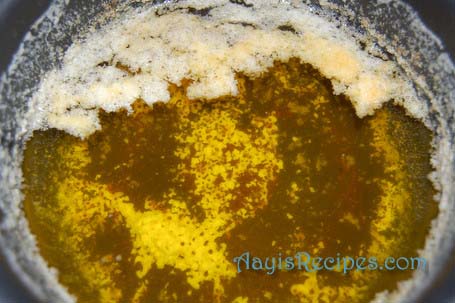
– Now add 1/8 th tea spn of salt. It helps the floating particles to settle at the bottom.
– When the ghee has cooled a bit, pour in glass jars taking care not to pour any of the solid particles.

– If everything has gone well, it solidifies when completely cooled.
– There is a considerable amount of ghee which remains in the vessel after you pour it in jars. With a spoon, remove all the solid particles. Now use the vessel to make daali thoy or any other daal and the final daal comes out very tasty and fragrant.
At my native some people add a small turmeric leaf to the milk which is used for making ghee . Personally I don’t like any extra flavor to it, so I don’t like to add anything.

Raw mango is called ambli (Konkani) or mavinkayi (Kannada). In India, it is a mango season now. Every time I talk to my parents, they talk about mangoes in our yard. We have many mango trees, though they are not any export quality mangoes, they are one of the best mangoes I have ever tasted. Juicy, sweet and full of pulp. So usually these are used in cooking also.
Aayi gave this recipe to me last week when I was in search of mango recipes. This is not the famous ambli gojju the Konkanis are familiar with(I will post that version some other time). The mangoes we get here are pathetic, so after couple of failure trials, I have stopped buying them. We get raw ones here, by chance if we get ripe one, they have the hairy pulp(not sure what it is called, it is impossible to eat these mangoes). So my best choice was to buy them from Indian store. I bought the most fragrant ones that I could find. When I tasted them, they were very sour. So I thought of using them for this recipe. This recipe calls for raw mangoes and jaggery is added to give the sweet taste to it. Instead of that I used these semi ripe – sweetish sour mangoes and the final result was very good. You can’t eat it in large quantity like a side dish, but it is best when tried like a chutney, a little at a time.
Ingredients: 1 cup mango pieces 1 tea spn jaggery 1 tea spn chili powder 1/2 tea spn finely chopped garlic Oil Salt
Increase or decrease the jaggery content according to the sweetness of mangoes. This dish should have a tinge of sweetness.
Method: Cook mango pieces in water till they are soft. Mash them. (I cooked them along with the skin and used mixer to slightly grind it). Mix jaggery, salt, chili powder and mix well. Heat oil and add garlic. Fry for a min and pour it on the gojju . Serve with hot rice.
Serves : 2-3 Preparation time : 15mins
