If there is one vegetable that I want to include in our diet and miserably failed, then it is broccoli. My friend keeps telling me how great this vegetable is. Lately I have been a little successful in my broccoli mission :). I include it in soups and pastas, but don’t make it ‘star of the dish’. I see better result with the approach!. Recently I made this soup and it came out really good.
Ingredients: 2 cups chopped broccoli 1 cup chopped leeks 1 tea spn chopped garlic Butter Cream Pepper powder Salt
Method: Heat butter and fry garlic for few seconds. Do not let it brown. Add broccoli and leeks. When they are cooked, grind them to smooth paste adding little water. Bring it to boil. Add cream, salt. Cook for few more minutes. Add pepper. Serve hot.
Pictorial:


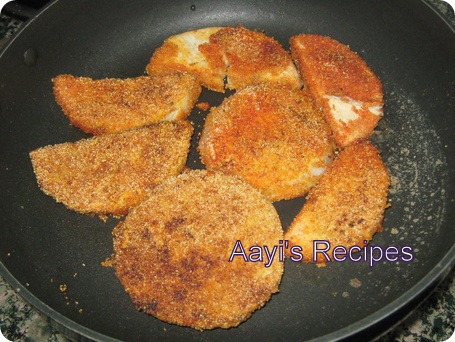
Many tubers are used in Indian cuisine. They are full of carbohydrates and are easily digestible. Yam or suranagadde is known to many people. Maaddi – tuber from colocasia plant is the other popular tuber available here. This is a type of colocasia with slightly darker and thicker leaves. It is usually available after the rainy season or early winter. Farmers dig out the tubers when the leaves of the plant dry up. There are many verities of maddis – small and large sized ones. The portion connected to the leaves is soft and is used to prepare phodis. Rest of it is harder and is used to prepare bharth and randayi(sidedish). Many people use the leaves to prepare pathrode , alavatti or venti ganti)randayi.
Ingredients: Maaddi slices Salt Asafoetida Rava/Sooji Chilli powder Besan Oil
Method: Peel off the skin of maddi and make slices of the size of 3/4 cms thickness. Put them under water for about ten minutes.Remove them from water and sprinkle salt and asafoetida. Keep them aside for 10 – 15 minutes. On a different plate, mix rava, chilly powder and besan. Roll the maaddi pieces in this mixture and put on the hot frying pan. Spread 1-2 tea spn oil and cover the lid, let them cook. When they are fried, turn them upside down. sprinkle some water and fry further.
PS: Some people get itching after touching the maddi. Before touching water, wash your hands with tamarind water. The portion of Maddi attached to the leaves is soft and should be used to prepare phodis.

Pictorial: