
I have been going through different food blogs and saw dishes from different parts of India. But couldn’t find any Goan recipes. So this is my entry from beautiful Goa for the Independence day parade .
I baked this one today, just to be sent to the parade. I wanted to decorate it like Indian flag, but didn’t manage to get it right. When I bought different colored icings from Walmart, the lady on the counter asked me – “planning to decorate cake?”. I said “Yes, I am trying to learn”. She said “Don’t worry, however it looks, it will taste great”. That time I was 100% sure that I can decorate it well. Today I realized whatever she said was correct. I think I still have to try a lot before learning to decorate :(.
Before this, I tried two varieties of banana cakes, this and with Pushpa’s recipe . Both were amazing. What makes this cake different is the amazing aroma of cardamom and no egg in it.
Ingredients: Ripe bananas 3 Rava (wheat sooji) 1 cup Sodium-bi-carb(baking soda) 1/2 tsp Cardomom powder 1/2 tsp Coconut milk 2 cups Sugar 1/2 cup Cashewnuts 1 tsp Salt
I did not add salt and used 1 tea spn baking powder instead of baking soda.
Method: Roast rava over low heat in a kadai until aroma wafts from pan. Soak the rava in coconut milk for 2 hours. Mash the bananas and add to rava along with sugar. Add soda, salt and cardamom powder. Mix the cashews. Apply little ghee to cake mould (I used parchment paper in the baking tray), pour in the mixture.

Preheat the oven at 350F for 10mins. Bake for around 35mins at 350 F or until a knife put in center comes out clean.

Decorate in whatever way required (optional).

Makes 8 pieces Preparation time : 10min (excluding the baking time).

Elephant foot yam or suran/surnu is grown widely at my native. This root is used in a wide variety of dishes in Konkani cooking. We used to grow them a lot in our backyard. I still remember my grandfather used to take out these roots carefully and wash them and store to be used throughout the year.
I never had the courage to use this root in my cooking, mainly because some of the roots cause strong itching to hands after cutting them. So aayi applies thick ‘tamarind juice’ to hand after cutting them to overcome the itching (apply thick juice and leave it for 5mins then wash hands).
I had no idea how to pick up these roots or what they are called here. When Aruna told me about ‘yam’, I searched for them in Chinese market, but they looked very different than the one we got in India. It was white from inside unlike the suran which is reddish in color. Still when I prepared this traditional dish, it tasted great. Recently I saw ‘frozen suran’ in Indian store. So next time, I will try this dish with authentic suran :).
Raw jackfruit(kadgi or chakko) koot is also prepared on similar lines. I will post the recipe seperately.
Ingredients: Suran (cut into tiny pieces) 1/2 cup Coconut 1 cup Mustard seeds 1 tea spn Methi (fenugreek) seeds 1/4 tea spn Asafoetida a pinch Red chilies 4-5 oil 1 and 1/2 tea spns Curry leaves 4-5 Tamarind 1/2 tea spn Salt
Method: Mix 1 tea spn of salt with the pieces and leave them for 30mins. Squeeze out the water off suran pieces and wash them in water for once or twice. Heat 1/2 tea spn of oil and fry them on a low flame till they become almost black and crunchy.

Heat 1/2 tea spn of oil and add 1/2 tea spn mustard. When it starts popping, add methi seeds and asafoetida. Grind this with coconut, red chilies((fry the chilies in oil along with mustard and methi, if they have become soft. This will help in grinding them to smooth paste) and tamarind to chutney consistency. Add salt (suran pieces will retain some salt from the previous step, so take care not to add too much salt).

Heat remaining oil and add mustard seeds. When they start popping up, add curry leaves. Add this seasoning to the chutney.

Just before serving, add the fried suran pieces to the chutney. (Take care not to add hot suran pieces to chutney. It spoils the chutney soon. So cool the pieces to room temperature before mixing).
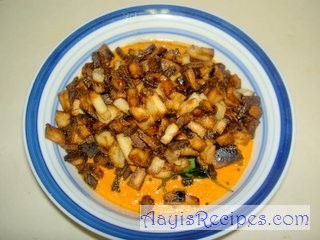
Serves : 3 Preparation time : 20mins
